Most comprehensive guide, created for all Web Scraping developers.
Scrapeless offers AI-powered, robust, and scalable web scraping and automation services trusted by leading enterprises. Our enterprise-grade solutions are tailored to meet your project needs, with dedicated technical support throughout. With a strong technical team and flexible delivery times, we charge only for successful data, enabling efficient data extraction while bypassing limitations.
Contact us now to fuel your business growth.
Provide your contact details, and we'll promptly reach out to offer a product demo and introduction. We ensure your information remains confidential, complying with GDPR standards.
Your free trial is ready! Sign up for a Scrapeless account for free, and your trial will be instantly activated in your account.
Web scraping with JavaScript and Node.js comes down to a single early call — is the data in the HTML, or built by JavaScript? Cheerio handles the first case at parser speed; Puppeteer handles the second by rendering the page. Running both on Scrapeless Scraping Browser means the fetch succeeds either way, with residential egress and anti-detection underneath. For a deeper anti-bot workflow, see the Scrapling + Scrapeless guide; the Scraping Browser product page and docs cover the full SDK surface. Check the raw HTML first, reach for Cheerio when you can and Puppeteer when you must, and wait on content not the clock.

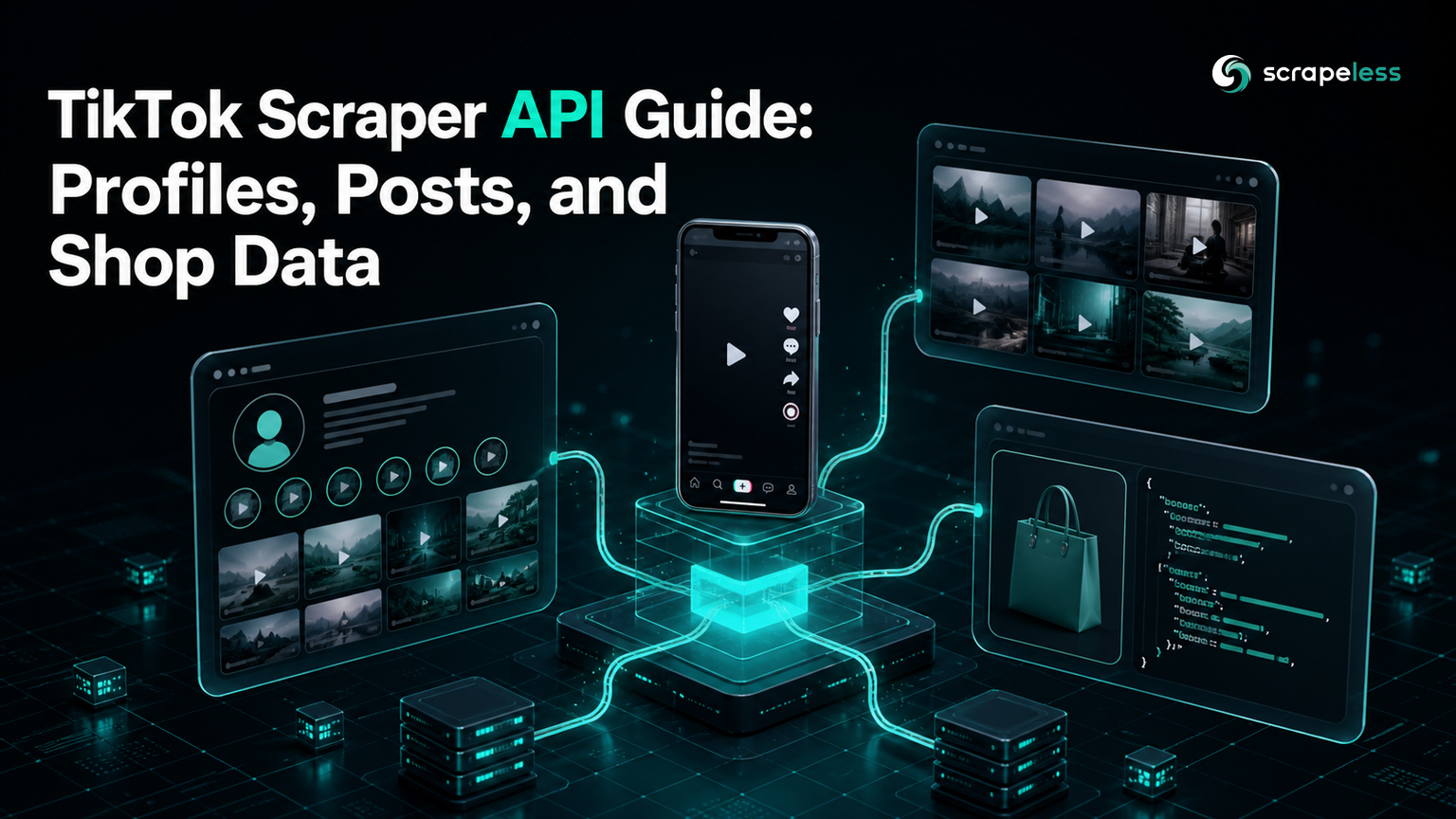
This article explains a dual-read approach to scraping TikTok, combining the extraction of in-page rehydration JSON with the capture of scroll-triggered XHR responses. It concludes that by using the Scrapeless Scraping Browser with residential proxies and anti-detection features, developers can reliably bypass TikTok’s aggressive fingerprinting to collect high-fidelity social data for creator analysis and market research.

This article provides a comprehensive technical walkthrough on using the Scrapeless Scraping Browser to automate data extraction from Qwen Studio, overcoming challenges like JavaScript rendering and token-by-token streaming. It explains how to programmatically drive the chat interface to capture structured answers and reasoning traces, concluding that this approach is essential for building reliable AI evaluation datasets and real-time brand monitoring pipelines.

The Scrapeless Scraper API turns the Google local pack into a single POST against the scraper.google.search actor. Send tbm: "lcl" and you get map-backed business listings — titles, ratings, reviews, and addresses — as structured JSON.

Google Images data comes from a single POST to the scraper.google.search actor with tbm: "isch". The Scraper API renders and parses the page server-side, so you read structured JSON back — no browser, no parser to maintain.

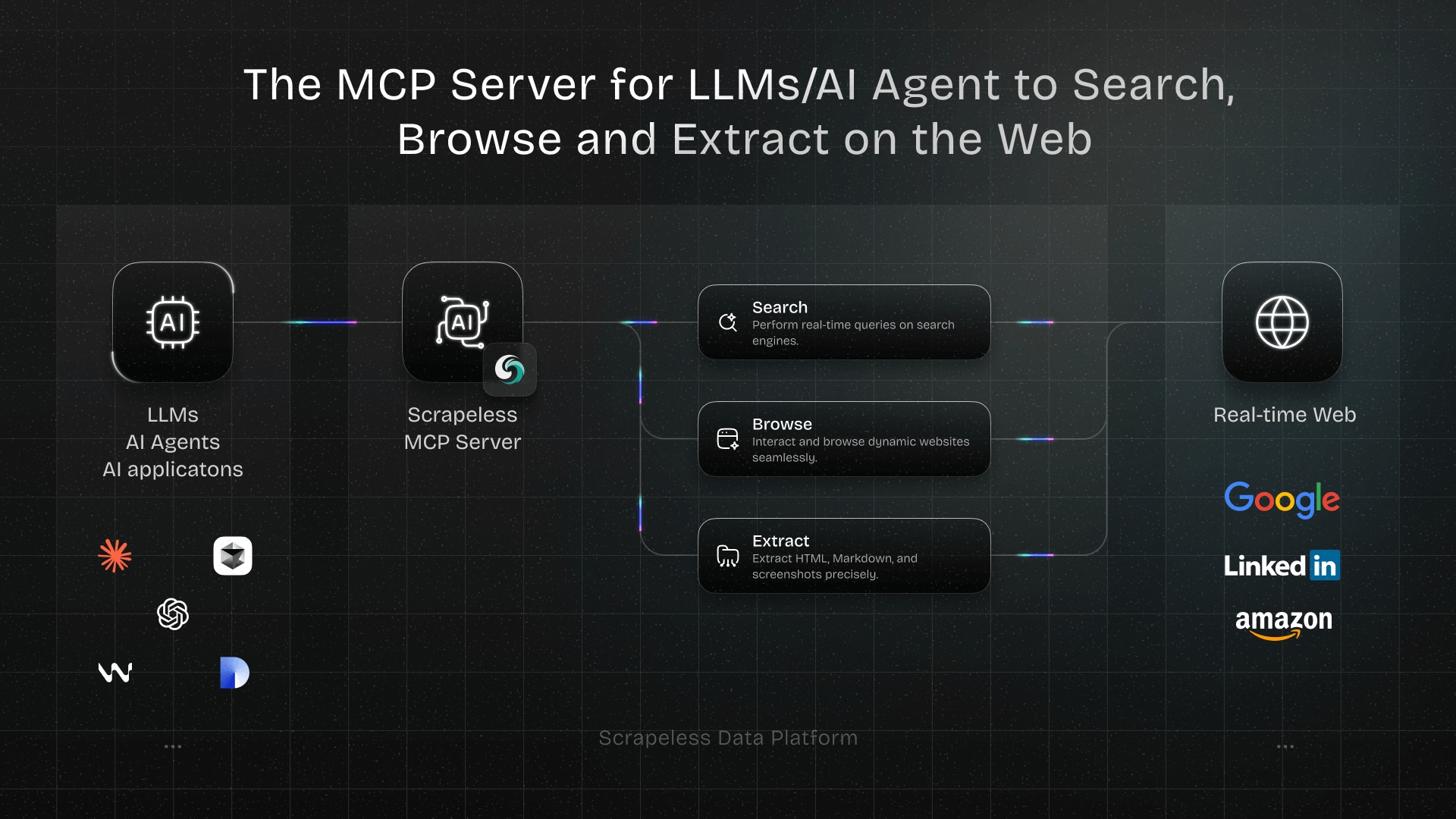
The langchain-mcp-adapters package connects a LangChain app to the Scrapeless MCP server and returns 21 ready-to-bind web tools — browser control, page scraping, Google Search and Trends — testable before any model is involved.

Retrieval answers are only as good as the text you indexed. This pipeline fetches fully rendered HTML through the web unlocker, subtracts page chrome, and chunks the prose with overlap and provenance — a clean corpus ready for any embedding model.

ChatGPT, Grok, Gemini, Perplexity, Copilot, and Google's AI Overview all answer buying questions with citations. Capture all six through one endpoint, normalize the citation schemas, and chart your brand's share of citation over time.